Tour operator websites that handle
the complexity beautifully.
A tour operator website — outbound, inbound, or receptive in US terms — has to carry complex itineraries, multiple destinations and both B2B and B2C audiences at once. We build tour operator websites that handle all of it — and make it look effortless.
Complex itineraries, simple websites.
Tour operator websites have specific requirements that generic web agencies struggle with — destination filtering, itinerary pages, multiple departure dates, group and private tour options, B2B and B2C audiences simultaneously.
We have built tour operator platforms that handle all of this without feeling clunky. Clean design, intelligent architecture, and content structures that actually work for complex multi-destination products.
Independent Tour Operators
Boutique and specialist operators with curated products. We help you look bigger than you are — in the best possible way.
Adventure & Activity Operators
Multi-day treks, cycling tours, wildlife expeditions — we build sites that communicate the experience and handle complex bookings.
Tailor-Made Specialists
Custom and bespoke travel operators. Showcase your expertise without losing the personal touch that defines your brand.
The operational detail a generalist misses.
A tour operator website is not a brochure. It is the place where a complex, multi-leg product has to be made legible to two very different audiences at once — the trade partner checking whether your Tanzania itinerary can be sold to their client, and the direct consumer deciding whether to trust you with a once-in-a-lifetime trip. Most web agencies build for one of those audiences and bolt the other on afterwards. We architect for both from the first wireframe, because we have sat on both sides of that conversation.
That means itinerary structures that hold day-by-day detail without becoming unreadable; destination and theme filtering that mirrors how your clients actually search; the ability to present the same product to trade and consumer audiences with the right pricing visible to the right people; and content models your team can update in-house without coming back to a developer every time a departure date or a rate changes.
Itineraries that scale
Whether you sell ten set departures or a hundred bespoke routes, the site has to present a four-night extension and a three-week multi-country epic with the same clarity. We build flexible itinerary components — day-by-day breakdowns, map views, what's-included logic — that stay clean as your product range grows.
Trade and consumer in one
If you sell B2B and B2C, your site can serve agent-facing net rates, downloadable resources and a partner login alongside an inspiring consumer journey — without the two getting in each other's way. We have built exactly this for operators who refused to choose between channels.
Built for enquiry, not abandonment
High-value, considered-purchase travel rarely converts on a single visit. We design the enquiry path around how people really buy a big trip — save-and-return, tailor-made request forms, and fast, mobile-first pages that load even on a patchy connection in the field.
Have you built tour operator websites before?
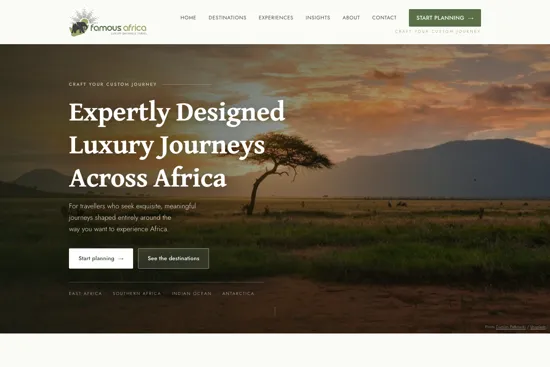
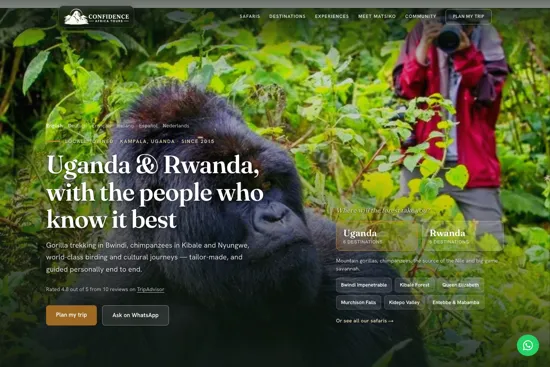
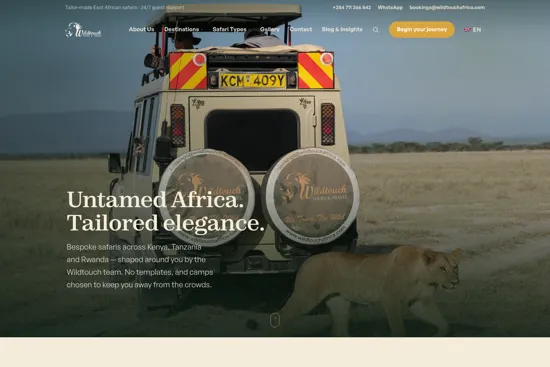
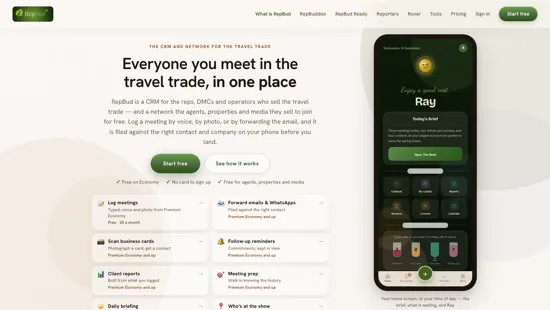
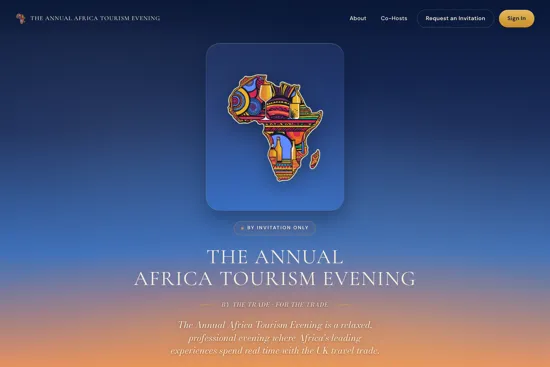
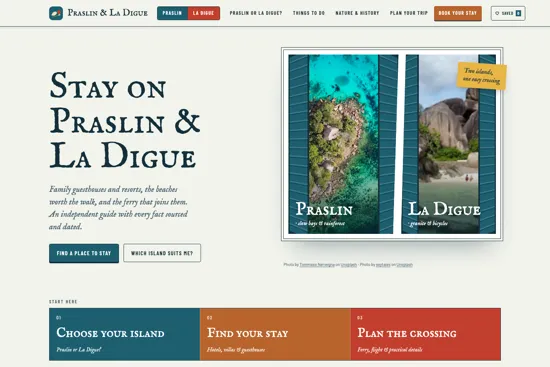
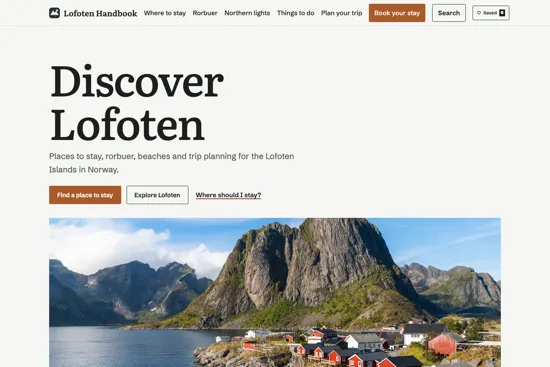
Yes, and they are live and visitable rather than screenshots in a deck. We built the current sites for Confidence Africa Tours, an operator selling Uganda and Rwanda, and Wildtouch Tours & Travel in Nairobi. Famous Africa is a luxury travel designer working the same product from the other end. Go and look at all three — that is what they are for.
How is a tour operator website different from a travel agency website?
A tour operator owns and packages the product, so the site has to carry detailed itineraries, departure and pricing logic, and often both trade and consumer audiences. A travel agency sells other people's product, so its site leans on curation, advisor credibility and lead capture. We build both, but we build them differently — because they sell differently.
Can you connect the site to our reservations or booking system?
Yes. We integrate with the platforms operators actually use, and where a full live-booking integration is not the right fit, we build intelligent enquiry and tailor-made request flows that hand clean, structured leads to your sales team rather than a one-line contact form.
We are a small specialist operator. Can a website make us look bigger?
That is one of the things we do best. Considered design, a confident content structure and genuine product depth let a boutique operator stand alongside far larger competitors — while keeping the personal, expert feel that is the reason clients chose you in the first place.
What makes a good tour operator website?
Tour operator websites need clear destination architecture, itinerary pages that rank on Google, departure date calendars, and trust signals for high-value bookings. Charnette Labs builds sites specifically for this structure — we understand how travellers research and book multi-day tours.
Can you build itinerary pages that rank on Google?
Yes. We build structured itinerary pages with destination schema markup, FAQ schema, and keyword-optimised content that helps individual tour pages rank for specific destination searches. This is one of the highest-ROI investments for a tour operator.
Do you work with specialist and adventure tour operators?
We're built to support specialist tour operators across Africa, Asia, the Americas and beyond. We understand the difference between a luxury safari operator, an adventure travel company and a cultural tour specialist — and we build websites that reflect that positioning.
How long does a tour operator website take to build?
Most tour operator websites take 6–12 weeks from kickoff to launch, depending on the number of destinations, itineraries and integrations required. We provide a detailed project timeline before work begins.
How much does a tour operator website cost?
A standard build (one website and one app, for iOS and Android) starts from GBP 3,000 + VAT, and hosting and care is from GBP 99 + VAT a month. Terms, conditions and usage limits apply. Until 31 December 2026, new business clients who take 12 months’ hosting and care, paid upfront, pay no build fee for one website and one app, for iOS and Android (limited to the first 25 clients or 31 December 2026, whichever comes first; a case study and testimonial are part of the offer). See the offer. Itinerary builders, trade portals with net rates and reservation system integrations go beyond the standard build and are quoted after a discovery conversation, in GBP, EUR, USD or ZAR.
Do you build tour operator websites with itinerary builders and B2B trade portals?
Yes. Tour operator websites at this level often need three things layered: a public-facing destination and itinerary site, a trade portal for contracted travel agents (with net rates, marketing assets, training material), and an itinerary builder either for in-house staff or for agents to use. Charnette Labs builds all three as a connected system rather than three separate tools.
Should a tour operator website target B2B trade buyers, B2C consumers, or both?
It depends on the operator’s distribution model. Pure trade-only operators (selling exclusively through travel agents) need a B2B-focused site with a trade login, training resources and clear product information for agents. Direct-sell operators need a B2C site with bookable trips, departure dates and consumer marketing. Many operators sell both ways — in which case the website needs to serve both audiences clearly without confusing either.
Can you integrate a tour operator website with leading reservation systems?
Yes. Charnette Labs integrates tour operator websites with the reservation and itinerary platforms the industry uses. Itineraries built in those systems can flow into the website automatically, and enquiries from the website can flow back into the reservation system without manual re-entry.
Do tour operators need a public website if they only sell through travel agents?
Yes — even pure B2B tour operators benefit from a public website. Travel agents research operators before recommending them. So do journalists, FAM-trip prospects, and increasingly AI assistants when a consumer asks "best tour operator for [destination]". The public site does not need to take consumer bookings; it needs to look credible, list your destinations clearly, and explain your trade terms in a way that an agent can quickly assess.
What is the difference between a tour operator and a DMC?
A tour operator typically packages and sells trips. An outbound operator sells from a source market (UK, US, Australia) to international destinations; an inbound operator receives travellers into a destination, where they often function as a DMC. A DMC operates within a destination, handling logistics. The roles overlap — many businesses do both — but the distinction is whether the company sells the trip or operates the ground.
Should a tour operator website be priced in the destination currency or the customer currency?
For consumer-facing pages: customer currency, with currency selection prominent. For trade portal pages: destination currency net of commission, in line with how the tour operator contracts with their suppliers. Mixing the two confuses everyone. The website logic should respect which audience it is talking to.
FIT · GIT · allotment · release back · DMC — read the full tourism trade glossary →
DMC websites · Travel agency websites · Representation company technology · Trade show websites
A website as good as the tours you run.
Tell us about your product range and we will show you how we would architect and design your new site.
Start the conversation →Prefer email? hello@charnette.io