The tourism trade, decoded.
DMC, FAM, INDABA, net rate, FIT, GIT, channel manager, OTA — the language of the travel trade, defined clearly. Compiled by a tourism industry professional with nearly two decades' experience across three continents.
Every industry has its shorthand. The tourism trade has more than most — a stack of acronyms (DMC, FIT, OTA, PMS), trade-show names that double as verbs ("we'll catch you at INDABA"), and pricing terminology that makes outsiders' eyes glaze over.
This page is the cheat sheet. It exists because we were asked some version of "what's a DMC again?" once too often, and because anyone briefing a technology partner on a tourism project deserves a partner who already knows the answer. If a term you need isn't here, let us know and we'll add it.
Travel trade roles
Who does what in the chain between a traveller and the experience they buy.
DMC — Destination Management Company
A locally-based company that operates the on-the-ground logistics for inbound visitors: ground transport, transfers, excursions, accommodation contracts, guides and event management. DMCs sell B2B to tour operators and travel agents in source markets, never directly to the public.
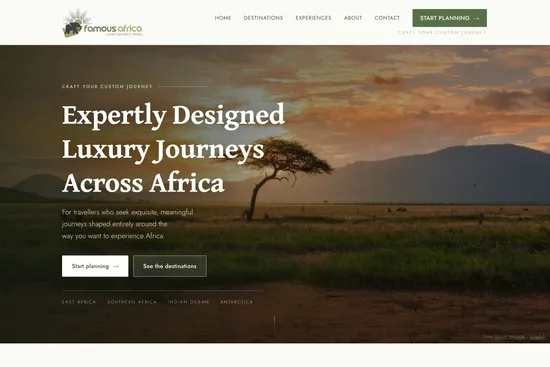
See also: Tour Operator, Ground Handler, DMC websites by Charnette Labs
Tour Operator
A company that packages travel components — flights, accommodation, transfers, activities — into complete trips and sells them. Outbound operators sell from a source market (such as the UK or the US) to international destinations. Inbound operators receive travellers into a destination, where they often function as a DMC. Many businesses do both.
See also: DMC, Tour operator websites by Charnette Labs
Wholesaler
A travel company that buys accommodation and ground services in bulk at net rates from suppliers and resells them to retail travel agents, tour operators or OTAs. The wholesaler doesn't own the product or sell to the public directly; they're a middle layer in the distribution chain.
See also: DMC and trade websites by Charnette Labs
Receptive Operator
North American term for an inbound tour operator or DMC. If you hear it from a US-based contact, they mean a DMC.
See also: DMC websites by Charnette Labs
Travel Agent
A retail-facing business that sells travel to the consumer, usually earning commission from suppliers or charging a service fee. Travel agents may be IATA-accredited (for issuing flight tickets), bonded under ABTA in the UK, or independent.
See also: Travel agency websites by Charnette Labs
Representation Company — Rep Company
An outsourced sales, marketing and PR team representing tourism suppliers — hotels, lodges, DMCs, tourist boards — in a source market they cannot easily reach themselves. The rep company introduces the supplier's product to local trade buyers, hosts events, conducts sales calls and reports back. A common arrangement for African suppliers selling into the international markets.
See also: Technology for representation companies
Ground Handler
A company providing operational services on the ground in a destination — transfers, meet-and-greet, excursions. Often used interchangeably with DMC, though "ground handler" implies a more operational, less consultative role.
See also: DMC websites by Charnette Labs
OTA — Online Travel Agency
A digital booking platform such as Booking.com, Expedia or Hotels.com that aggregates inventory from suppliers and sells direct to consumers. OTAs typically charge the supplier 15–25% commission per booking, which is why direct-booking strategies — better websites, push notifications to past guests, loyalty incentives — matter so much to independent properties.
Trade shows & events
The annual events where the travel trade meets, talks, and books.
WTM London — World Travel Market
The largest annual B2B travel trade event in the UK, held each November at ExCeL London. Brings together tourism suppliers, DMCs, tour operators, travel agents and media from across the world.
INDABA — Africa's Travel Indaba
Held annually in Durban, South Africa, INDABA is the leading tourism trade show on the African continent, bringing African tourism product — lodges, DMCs, tour operators, tourism boards — together with international buyers from source markets worldwide.
ITB Berlin
The world's largest travel trade fair, held annually in Berlin, Germany. Combines a B2B trade element with a public-facing weekend.
ILTM Cannes — International Luxury Travel Market
The premier global B2B event for the luxury travel sector, held annually in Cannes, France. Attendance is by invitation, with a strict buyer-supplier matchmaking format.
ATM Dubai — Arabian Travel Market
The major Middle East travel trade event, held annually in Dubai.
Africa Showcase
A series of UK and Europe-based trade events run by ATTA bringing African tourism suppliers to the international travel trade in their own backyard.
Experience Africa
A UK-based annual trade event for African tourism suppliers and trade buyers.
USTOA — United States Tour Operators Association
Both an industry association and an annual conference for tour operators selling internationally to the US market.
See also: Association websites by Charnette Labs
Industry associations
The trade bodies that accredit, advocate and protect.
ABTA — Association of British Travel Agents
UK trade association for travel agents and tour operators, also providing consumer financial protection through the ABTA scheme. ABTA bonding is widely recognised by UK travellers as a mark of trust.
See also: Association websites by Charnette Labs
ATOL — Air Travel Organiser's Licence
UK government scheme administered by the CAA, protecting travellers buying flight-inclusive package holidays from UK businesses. Required by law for any UK business selling such packages.
See also: Association websites by Charnette Labs
ATTA — Africa Travel and Tourism Association
UK-based trade body promoting African tourism in source markets through events (Africa Showcase, Experience Africa), training and trade introductions. Members include African suppliers, tour operators specialising in Africa, rep companies and travel media.
See also: Association websites by Charnette Labs
SATSA — Southern Africa Tourism Services Association
South African industry association for inbound tourism businesses providing accreditation, advocacy and a financial protection scheme. Membership is a recognised quality marker for South African DMCs and ground handlers.
See also: Association websites by Charnette Labs
FEDHASA — Federated Hospitality Association of Southern Africa
Trade association representing the South African hospitality industry — hotels, lodges, restaurants and related businesses.
See also: Association websites by Charnette Labs
IATA — International Air Transport Association
Global trade association of the world's airlines. Also operates the IATA accreditation scheme that allows travel agents to issue airline tickets directly.
See also: Association websites by Charnette Labs
Pricing & booking
The terminology of how rooms, seats and trips are priced and held.
Net Rate
The wholesale price a supplier offers to the trade. The trade then marks it up to sell. Net rates are confidential and typically not disclosed to consumers — supplier contracts often forbid it.
See also: Trade portals with protected net rates
Rack Rate
The undiscounted, public-facing maximum price for accommodation. Rarely paid in practice; it serves as a reference point against which discounts and trade rates are calculated.
See also: Trade portals by Charnette Labs
BAR — Best Available Rate
The lowest rate publicly available for a given date without restrictions such as advance purchase or non-refundability.
See also: Hotel websites by Charnette Labs
Allotment / Allocation
A pre-agreed block of rooms or seats held by a supplier for a specific buyer (such as a tour operator), to be sold within a defined timeframe. Different markets use the words slightly differently; many people treat them as synonyms.
Release Back
The point at which an unsold allocation is returned by the buyer to the supplier for general sale. Release-back deadlines (e.g., "30 days prior to arrival") are negotiated as part of the allocation contract.
FIT — Fully Independent Traveller
A traveller, or an itinerary, that is independent rather than part of a fixed group tour. FIT itineraries are typically built bespoke by a tour operator or DMC for a specific client.
See also: Tour operator websites by Charnette Labs
GIT — Group Inclusive Tour
A pre-packaged group tour with fixed dates, fixed itinerary and a minimum group size. The opposite of FIT.
See also: Tour operator websites by Charnette Labs
FAM Trip — Familiarisation Trip / Educational
A multi-day hosted trip to the destination, offered complimentary or heavily discounted by a supplier or destination so that travel agents, tour operators or media can experience the product first-hand and sell it more effectively. Typically three to ten nights, running a property-by-property itinerary. Also called an "educational" or "ed" in some markets. A FAM trip is not an evening function — the single-evening equivalent is a roadshow or a trade workshop.
See also: Trade sales and marketing technology
Roadshow — Trade Roadshow / Workshop
A supplier, tourism board or representation company taking a group of suppliers to the trade rather than the other way round — a short tour of several cities, each stop usually an afternoon workshop of table appointments followed by an evening function for local agents and operators. A roadshow is the single-evening counterpart to a multi-day FAM trip.
Tourism boards
The marketing and management bodies that promote destinations.
NTB — National Tourism Board
A government-funded body promoting an entire country as a tourism destination. Examples include South African Tourism, VisitBritain, Tourism Australia.
See also: Tourist board websites by Charnette Labs
DMO — Destination Marketing Organisation
A regional or national body responsible for marketing a destination and, in some cases, managing tourism strategy. DMOs may be government-funded, member-funded or a mix.
See also: Tourist board websites by Charnette Labs
CVB — Convention and Visitors Bureau
A US-style city or regional DMO with a particular focus on attracting conferences, events and meetings.
See also: Tourist board websites by Charnette Labs
RTO — Regional Tourism Organisation
A sub-national tourism body covering a specific region within a country.
See also: Tourist board websites by Charnette Labs
Tourism technology
The acronyms behind the systems that run the industry.
PMS — Property Management System
Software a hotel or lodge uses to manage reservations, check-ins, billing and operations. Examples include Opera, Cloudbeds, Mews, NightsBridge and Little Hotelier.
See also: Hotel websites by Charnette Labs
CRS — Central Reservation System
A system that holds inventory and rates and distributes them to multiple booking channels — often working alongside or as part of a PMS.
See also: Hotel websites by Charnette Labs
Channel Manager
Software that synchronises a property's availability and pricing across multiple OTAs and direct booking channels in real time. Stops the worst-case scenario of double-booking the same room.
See also: Hotel websites by Charnette Labs
Booking Engine
The reservation interface on a hotel or tour operator's own website, allowing direct online bookings without going through an OTA. Critical to any direct-booking strategy.
See also: Websites by Charnette Labs
GDS — Global Distribution System
A global B2B distribution network — Amadeus, Sabre or Travelport — used primarily by travel agents to book flights, hotels and other services. Pre-internet plumbing that still underpins large parts of the industry.
See also: Travel agency websites by Charnette Labs
Push Notifications
Brief messages sent from a website or app to a user's phone or browser. Web push works in browsers without an app installed; mobile push requires an installed app. They land directly on the lock screen, where opt-in audiences engage far more than with email — which is why push has become a serious channel for tourism businesses with past-guest databases.
Safari & lodge terms
The vocabulary of the safari and luxury wilderness sector.
Big Five
The lion, leopard, elephant, rhino and Cape buffalo — historically the five most dangerous animals to hunt on foot, now the headline species for safari marketing.
See also: Safari lodge websites by Charnette Labs
Tented Camp
A safari accommodation type using permanent or semi-permanent canvas tents, typically with full ensuite facilities and high-end finishes. Distinct from a "lodge" (built structure) but at the same comfort level. The canvas is a feature, not a compromise.
See also: Luxury tented camp websites
Bush Camp
A smaller, more rustic camp deep in a wilderness area, often without permanent infrastructure. The bush-camp experience trades polish for proximity.
Mobile Safari
A safari where camp is set up and broken down at each location, allowing travellers to follow game movement — particularly across landscapes like the Okavango Delta or the Serengeti migration routes.
See also: Luxury camp websites by Charnette Labs
Concession
An exclusive-use area within or adjacent to a national park or reserve, leased from the government or community to a private operator. Concessions allow controlled tourism with much lower visitor density than the open park.
See also: Game reserve websites by Charnette Labs
Conservancy
A community-owned or jointly-managed area, often adjacent to national parks, where tourism revenue funds conservation and community development. The conservancy model has been particularly successful in Kenya and Namibia.
See also: Game reserve websites by Charnette Labs
This glossary is a living document. Spotted a missing term? Disagree with a definition? Drop us a line — we'd rather get it right than be the only ones convinced we already are.
Frequently asked questions.
What is a DMC in travel?
A DMC (Destination Management Company) is a locally-based company that operates the on-the-ground logistics for inbound visitors — ground transport, transfers, excursions, accommodation contracts, guides and event management. DMCs sell B2B to tour operators and travel agents in source markets, never directly to the public.
What is the difference between a DMC and a tour operator?
A DMC operates within a destination, handling the ground logistics for visitors. A tour operator typically packages and sells trips. Outbound tour operators sell from a source market (e.g., the UK) to international destinations; inbound tour operators receive travellers into a destination, where they often function as a DMC. The roles overlap — many companies do both — but the distinction is whether the business sells to the consumer (or to retail trade) or whether it operates the on-the-ground services.
What is a FAM trip?
A FAM trip (familiarisation trip, also called an 'educational') is a complimentary or heavily discounted trip offered by a supplier or destination to travel agents, tour operators or media so they can experience the product first-hand and sell it more effectively.
What is INDABA?
INDABA (Africa's Travel Indaba) is the leading tourism trade show on the African continent, held annually in Durban, South Africa. It brings African tourism suppliers — lodges, DMCs, tour operators, tourism boards — together with international buyers from source markets worldwide.
What is the difference between net rate and rack rate?
The net rate is the wholesale price a supplier offers to the trade — confidential, not disclosed to consumers. The trade marks the net rate up to sell. The rack rate is the undiscounted, public-facing maximum price for accommodation, rarely paid in practice; it serves as a reference point against which discounts are advertised.
What does ATTA stand for in tourism?
ATTA stands for the Africa Travel and Tourism Association — a UK-based trade body promoting African tourism in source markets through events, training and trade introductions.
What is the difference between FIT and GIT?
FIT (Fully Independent Traveller) refers to an independent traveller or itinerary, typically built bespoke. GIT (Group Inclusive Tour) refers to a pre-packaged group tour with fixed dates, fixed itinerary and a minimum group size.
A technology partner who already speaks your language
When you brief Charnette Labs on a website, an app or a piece of trade tech, you don't have to start by explaining what a DMC is, or why a release-back deadline matters. We've been in your meetings.
Start the conversation →Prefer email? hello@charnette.io