The short answer for most travel businesses: build a great website first, and add an app only when there is a clear reason people would return to it. A website is how you get found, win trust and take enquiries. An app is for repeat engagement — something a defined group opens again and again. Spending on an app before the website is doing its job is the most common way travel businesses waste a budget.
Start with the website
The website is the foundation: discovery in search and AI assistants, credibility, your product or service, and the path to enquire or book. Almost every travel business needs one, and for many it is the only digital product they will ever need. If the website is not yet pulling its weight, that is where the next pound should go.
When an app earns its place
An app makes sense when the experience depends on things a browser does less well — and, crucially, when people have a reason to come back. The clearest signals:
- Repeat use by a defined group. Staff, agents, members or returning customers who open it regularly, not one-time visitors.
- App push notifications. Timely, on-device prompts — a reason to re-open that a website cannot match as directly.
- A live event or moment. Schedules, networking and live features for a conference, trade dinner or roadshow (see our note on event technology).
- A working tool. A sales companion in the field, or a partner portal people use as part of their day.
- Device features or offline. Camera, wallet passes, location, or reliable use where signal is poor.
Website, app, or both?
It is not always either/or. A modern website can be installed to a phone's home screen and send web push, covering some of what people assume needs a native app — a sensible middle ground when the case for full native is not yet proven. The right question is not "do we want an app?" but "what would people do with it twice?" If you cannot answer that, the website is the better investment for now.
What it looks like in the trade
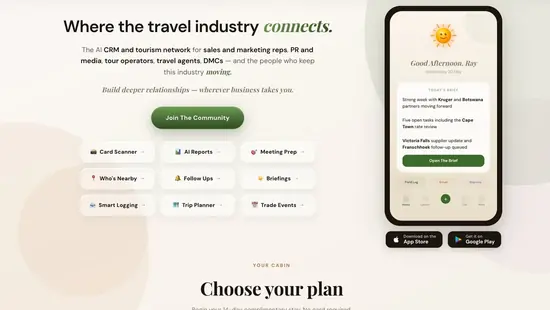
We build apps where the return-visit reason is real: a sales companion app for travel-trade reps that helps them work in the field, an event app for a trade evening with live features and timed catch-ups, and partner portals agents use week to week. In each case the app exists because someone opens it again and again — not because an app looks impressive.
What businesses get wrong
- Building an app for prestige, then watching it sit unopened after launch week.
- Skipping the website the app depends on for discovery and trust.
- No answer to "why would they come back?" — the single question that decides whether an app is worth it.
How to think about it
Get the website right first, then build an app when you have a clear, repeated reason for people to use it. If you are weighing the two, tell us what you want people to do — we will tell you whether that is a website, an app, or a website that behaves like one. For budgeting either way, here is what drives the cost.
Common questions
Does my travel business need an app?
Most travel businesses should build a great website first and add an app only when there is a clear reason people would return to it — repeat use by a defined group (staff, agents, members), app push notifications, a live event, a working tool like a sales companion or partner portal, or a need for device features and offline use. If you cannot say what people would do with the app twice, the website is the better investment.
What is the difference between a travel website and an app?
A website is how you get found, build trust and take enquiries — the foundation almost every travel business needs. An app is for repeat engagement: something a defined group opens again and again, with on-device push, offline use or device features. A website serves everyone who discovers you; an app serves the people who already have a reason to come back.
When is a mobile app worth it for a travel business?
An app is worth it when the experience depends on repeat use and on things a browser does less directly — regular use by staff, agents or members; timely on-device push notifications; a live event with schedules and networking; a working sales tool used in the field; or device features and offline reliability. The deciding question is always: why would someone open it twice?
Can a website do what an app does?
Partly. A modern website can be installed to a phone’s home screen and send web push notifications, covering some of what people assume needs a native app. It is a sensible middle ground when the case for full native is not yet proven. Native apps still win for deeper device integration, offline reliability and the most direct push experience.