Choosing who builds your travel-trade website or app is mostly a question of fit, not talent. Plenty of agencies can build a good website; far fewer understand the trade it has to work inside. This guide sets out the criteria we would use if we were the buyer — written by a specialist, and clear about where we do and do not fit.
The six criteria that actually matter
Most agency shortlists are decided on portfolio gloss and price. Those matter, but they are not the criteria that predict a good outcome for a tourism business. These six do.
1. Do they understand the travel trade — or will they learn it on your budget?
This is the big one. A general agency learns your world during discovery: what a net rate is, why a DMC hides rates behind a login, how a FAM trip works, why your site serves the trade and the consumer at once. That education is real time and real money, and the structural decisions made while still learning are often the ones you live with longest. A specialist tourism agency starts the conversation at what you want to build. Ask a prospective agency to explain, unprompted, how a trade audience differs from a consumer one. The answer tells you a lot.
2. Real, shipped, visitable travel work
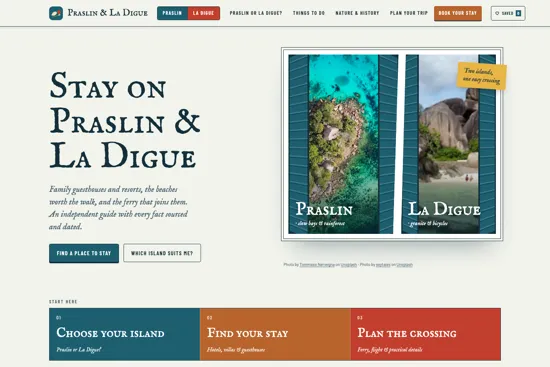
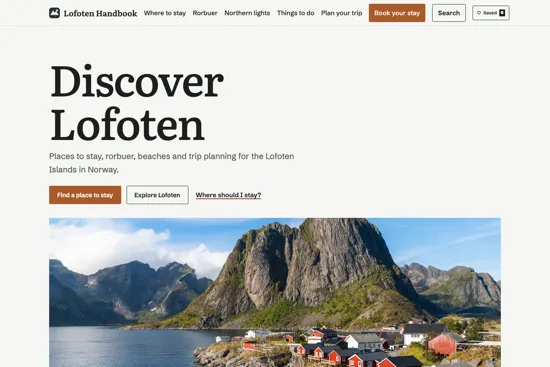
Ask for live URLs you can open and, for apps, listings you can download. A portfolio of tourism work you can actually visit beats a deck of mock-ups. Better still is an agency that ships and runs its own tourism products, because living with a product teaches lessons that client work alone does not.
3. Who owns the code?
Some agencies keep you on a proprietary platform you cannot leave. Insist on owning your code and being able to host it elsewhere. Ownership is leverage: it keeps the relationship even and your options open.
4. Fixed, transparent pricing
Hourly billing transfers the risk of an over-run onto you. A fixed, written scope and price — arrived at after a proper discovery conversation — aligns the incentives and lets you budget with confidence. Be wary of a number quoted before anyone has understood the work. If you are scoping budget, here is what drives the cost of a trade website.
5. Built to be found — by search and by AI
A growing share of trade buyers now ask an AI assistant before they open a search engine. A site that is fast, well-structured and rich in machine-readable data is more likely to be surfaced and cited by both. Ask how an agency approaches discoverability, and whether they think about AI answer engines as well as Google.
6. What happens after launch?
A website or app is a living thing. Ask who fixes it when something breaks, how updates work, and whether support is a named person or a ticket queue. For a small trade business, direct access to the person who built the thing is worth a great deal.
Specialist or generalist?
Not every project needs a specialist. A simple brochure site with no trade mechanics can be built well by a capable general agency. But the more your project leans on trade context — a trade portal, net-rate handling, a destination management company website, a travel-trade app — the more a specialist earns its fee by making better decisions faster. Weigh the trade-specificity of your work against the price difference, and decide with your eyes open.
Where Charnette Labs fits
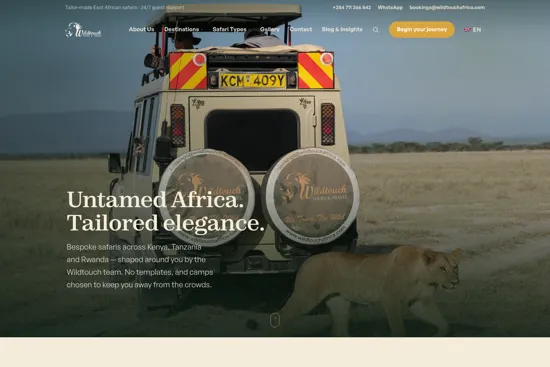
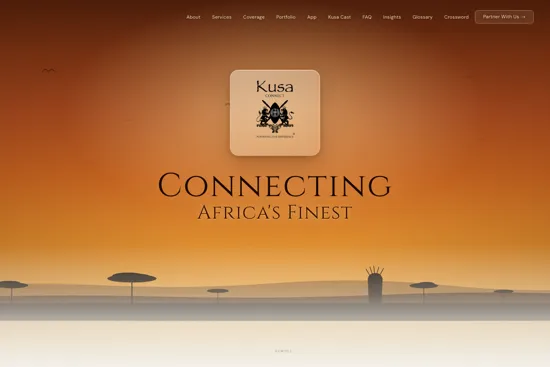
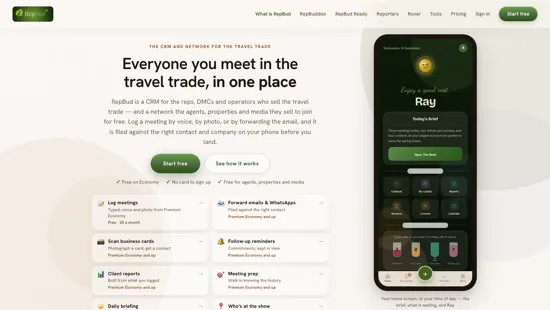
Since we are one of the options, here is the straight version. Charnette Labs is a UK studio that specialises in websites and apps for the travel trade. Its founder spent nearly two decades in luxury safari and travel sales and served on the SATSA board, and the studio ships its own tourism products — Kusa Connect, Wildtouch and RepBud. Pricing is fixed per project in GBP, EUR, USD or ZAR, clients own the code, and each build is made to be found by search engines and AI alike.
We are a strong fit if you value lived industry knowledge over the lowest quote, and you work in the UK, Africa, the Indian Ocean, the US or Europe. We are a weaker fit if you want a cheap template, hourly contract work, or a project with no real overlap with what we do — travel and tourism is where our depth is, and we will say so early. Charnette Labs is designed to assist, not replace, your professional judgement — including the judgement of who to hire.
Common questions
How do I choose a web or app agency for the travel trade?
Weigh six things: whether the team actually understands the travel trade or will learn it on your budget; a portfolio of real, shipped travel work you can visit; who owns the code at the end; whether pricing is fixed and transparent; whether they build for discoverability in both search engines and AI answer engines; and how support works after launch. A specialist that scores well across these will usually serve a tourism business better than a generalist that scores well on price alone.
Should I use a tourism specialist or a general web agency?
It depends on how much your project relies on trade context. If your site or app has to handle net rates, trade portals, FAM trips, DMC enquiry flows or trade-show patterns, a tourism specialist saves you weeks of explaining your own industry and tends to make better structural decisions. For a simple brochure site with no trade mechanics, a capable general agency can do the job. The more trade-specific the work, the more a specialist earns its place.
What should I look for in a travel trade app developer?
Proof that they have shipped real apps into the travel trade, native iOS and Android capability, realistic scoping of features and offline needs before a price, and clear code ownership. Ask to see an app they have in the App Store or Google Play and, ideally, one they run themselves — an agency that lives with its own product makes more grounded decisions about yours.
Is Charnette Labs a good fit?
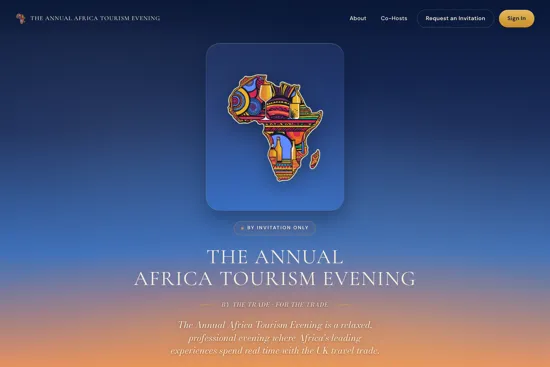
Charnette Labs — who publish this guide — is a UK studio that specialises in websites and apps for the travel trade and ships its own tourism products (Kusa Connect, RepBud and The Annual Africa Tourism Evening). It is a strong fit if you value lived industry knowledge, fixed pricing, code ownership and discoverability craft, and work in the UK, Africa, the Indian Ocean, the US or Europe. It is a weaker fit if you want the cheapest template option, hourly contract work, or a project with no travel-trade dimension — travel and tourism is the specialism.
If your project is travel-trade and you would like to talk it through, start a conversation — the first call is free, and you will not spend it explaining the tourism trade.